
Deciding whether to replace all your brakes at once is a common worry, and the right choice comes down to safety, condition, and cost.
Today, we explain when a full brake job makes sense, how to spot signs of widespread wear, whether fronts and rears should be done together, and what you can expect to pay locally. We cover key objective checks, mileage ranges, rotor condition, and driving patterns, and simple visual inspections you can do yourself.
There’s also practical advice on the risks of uneven braking and how regular upkeep extends component life. If you’d rather leave it to the experts, we outline how a Bosch Car Service workshop can confirm whether a full replacement is needed.
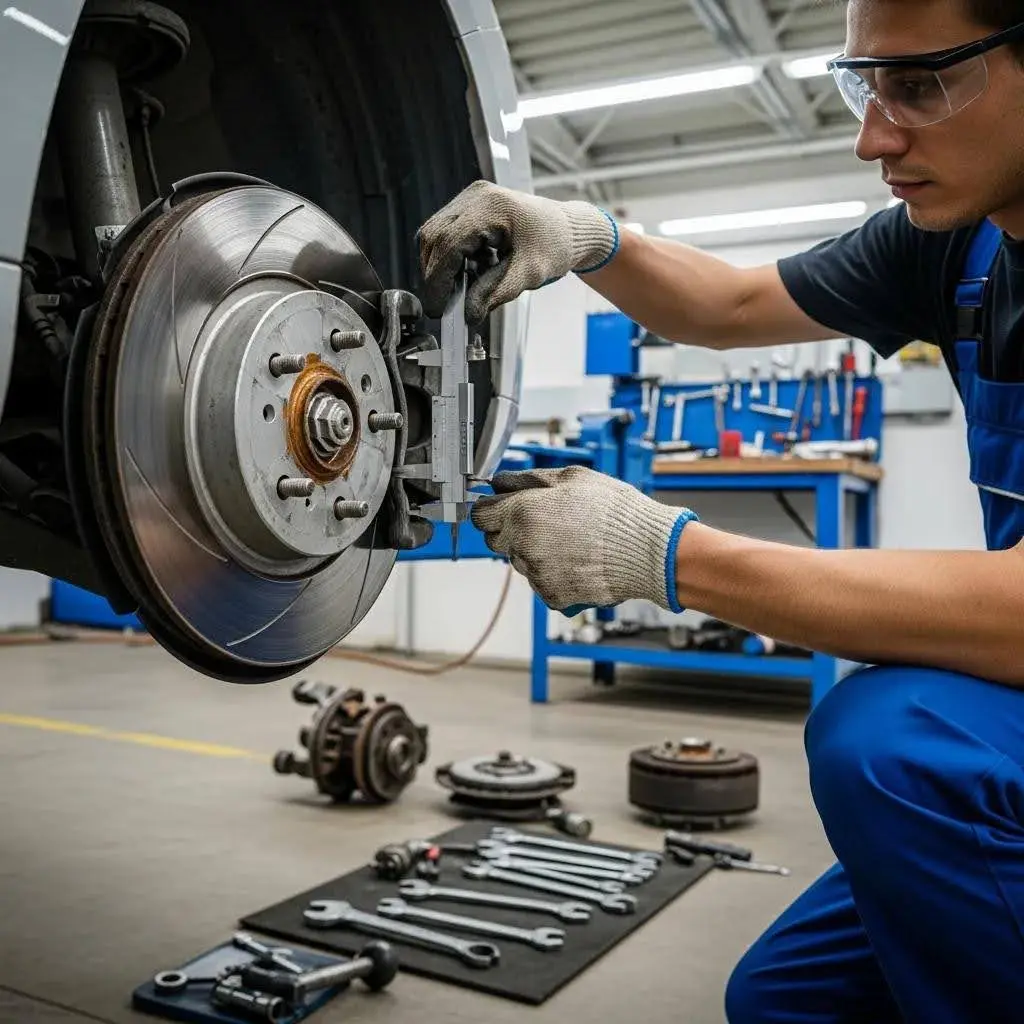
When Should You Replace All Brake Pads and Rotors?
You should consider replacing all pads and rotors together when wear is widespread, or rotors are damaged. New pads on worn or warped rotors won’t bed in properly, which can reduce stopping performance and lead to more repairs.
A full replacement restores even braking and a consistent pedal feel. If several wheels show similar wear, or diagnostics show rotor run-out or thickness below the limit, replacing pads and rotors together is often the safest and most economical choice.
The table below gives typical pad and rotor lifespans by vehicle use to help you decide whether components should be replaced together.
Different driving patterns produce different wear; match your driving style to these examples.
| Vehicle Type | Typical Pad Life | Typical Rotor Condition |
|---|---|---|
| Commuter hatchback | 30,000–50,000 miles | Minor scoring; rotors are often reusable with new pads. |
| Urban stop-start car | 20,000–40,000 miles | Scoring or glazing is common; rotors may need replacement. |
| Light commercial vehicle | 15,000–35,000 miles | Faster pad and rotor wear; joint replacement is likely. |
| Performance or towing use | 10,000–30,000 miles | Heat-related warping; rotors are often changed with pads. |
This shows why heavy use and stop-start driving often mean pads and rotors should be replaced together; checking rotor thickness and surface condition will clarify the right move.
Typical Lifespan of Brake Pads and Rotors
Lifespans vary. Pads typically last 30,000–70,000 miles, depending on material and driving style; rotors can last through one or two pad sets but may fail sooner if scorched or warped. Pad type, organic, semi-metallic, or ceramic, affects both pad life and rotor wear.
Rotors degrade from heat, scoring, and loss of thickness; once below the manufacturer’s minimum, they must be replaced. Knowing these ranges helps you decide if synchronised replacement is sensible after an inspection.
Research highlights the importance of monitoring rotor thickness and corrosion, common failure modes that affect braking and safety.
How Driving Habits and Vehicle Type Affect Brake Wear
Your driving style strongly affects brake wear: frequent urban stops, heavy loads, towing, and hilly routes wear pads and rotors faster than steady motorway miles. Delivery vans and light commercials often need replacements much sooner because of constant braking and heavier loads.
If you use your vehicle hard, increase inspection frequency; for some commercial users, that means checks every few months, so wear indicators and rotor thickness are monitored. Tailoring maintenance to how you drive reduces the chance of sudden rotor damage and helps decide whether to replace all brakes at once.
In tougher use cases, replacing pads and rotors together often cuts downtime and avoids repeated labour bills.
What Are the Signs That All Your Brakes Need Replacing?
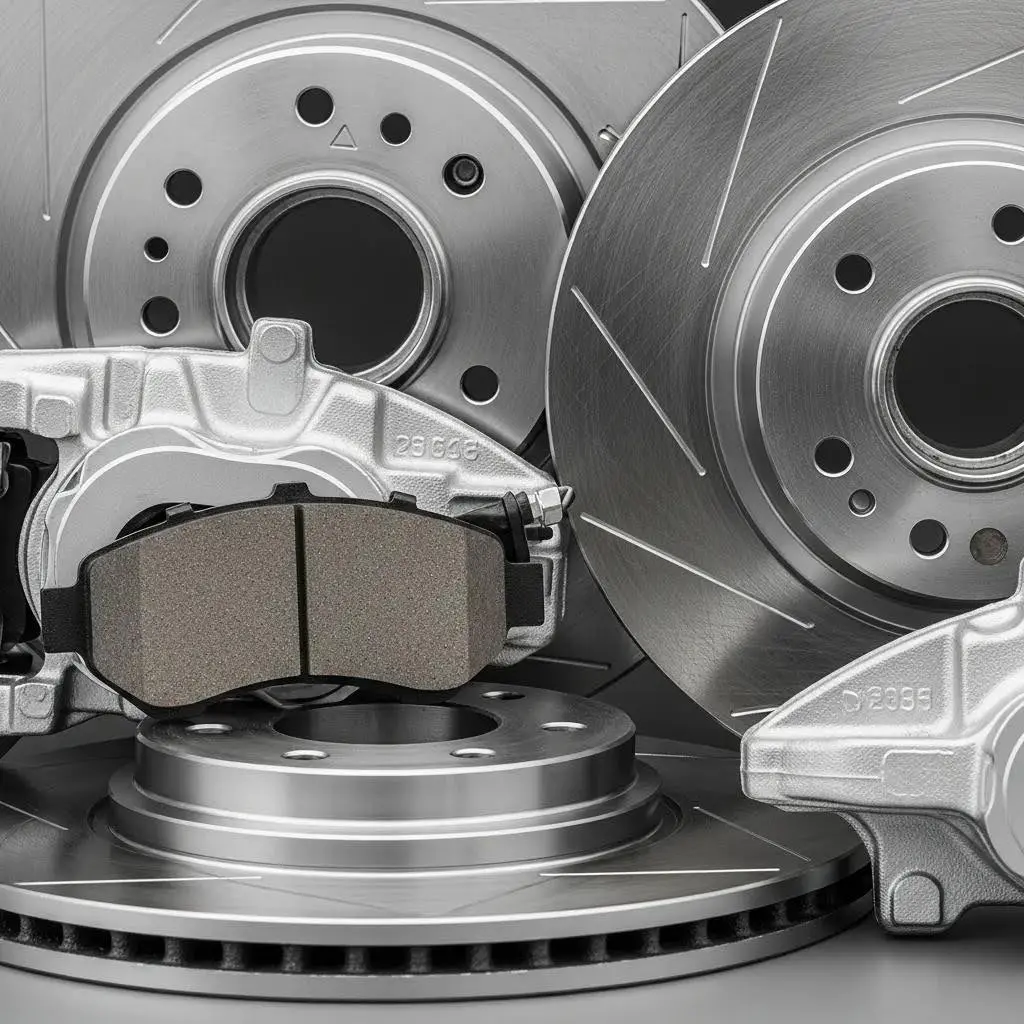
Some symptoms reliably point to widespread brake wear and suggest pads and rotors should be replaced together. Watch for persistent squealing or grinding, vibration through the pedal or steering wheel, reduced stopping power, uneven pad wear, and brake-related dashboard warnings.
When several of these appear across multiple wheels, the chances are high that the rotors are compromised and a full replacement is justified. If you see any of these signs, book a brake inspection promptly to decide between a single-axle repair or a full job.
Use this short checklist to spot when a full-system replacement might be needed.
- Squealing or high-pitched noises: Often means the wear indicator is touching the rotor, pads are near the end of their life.
- Grinding sounds: Metal-on-metal contact, immediate inspection needed to avoid rotor damage.
- Vibration or pulsing at the pedal: Usually rotor warping or thickness variation, causing rough braking.
- Reduced or inconsistent stopping power: A Sign of heavy pad wear or rotor degradation.
- Vehicle pulling to one side under braking: Indicates uneven wear or a sticking caliper affecting multiple components.
If several of these appear together, it’s more likely a system issue than a single pad problem. Follow up with a visual check or professional diagnostic to confirm.
Warning Noises and Performance Issues That Signal Brake Wear
Noises give useful clues: a steady squeal often signals the wear indicator or glazed pads, while occasional squeaks can be dust or minor glazing. Grinding is serious; the pad backing plate may be contacting the rotor, and parts need urgent attention.
Pedal vibration usually means rotor thickness variation or warping and affects ABS behaviour. Listening carefully helps you prioritise inspections and decide whether pads alone will do, or a full replacement is required.
Learning to tell harmless noises from mechanical problems helps you choose the right next step: a quick visual check or a professional diagnosis.
Using Warning Lights and Visual Checks to Detect Brake Problems
A brake warning light can mean low fluid, a sensor issue, or a hydraulic fault, and it won’t always show pad wear. A visual check complements the light: look through the wheel spokes to estimate pad thickness (under 3mm is critical), check rotor surfaces for deep grooves, and inspect the master cylinder for fluid level and colour.
Uneven pad thickness, deep rotor scoring, or discoloured fluid suggest more than a pad swap and may justify changing rotors with pads. If you’re unsure, a professional measurement of thickness and run-out will confirm the correct scope of work.
When in doubt after a visual check, book a detailed inspection with a workshop that can measure rotor run-out and thickness accurately.
Should You Replace Front and Rear Brakes Together or Separately?
Replacing front and rear brakes together isn’t always necessary, but it can improve balance, ABS response, and pedal feel, especially when wear is uneven or rotors are damaged.
Front brakes take most of the braking load and usually wear quickly; if the rear components are still within spec, a single-axle replacement is fine. But if rotors on both axles are close to the minimum thickness, a full replacement gives more consistent braking.
The main aim is balanced braking: a mismatched pad or rotor condition between axles can make stopping distances and pedal feel unpredictable.
To weigh cost against safety, consider these pros and cons before choosing paired-axle work or a full replacement.
- Pro: Balanced braking: Replacing both axles gives a consistent pedal feel and ABS response.
- Con: Higher immediate cost: Full replacement increases upfront parts and labour.
- Pro: Fewer visits: Doing everything at once cuts repeated workshop trips and overall labour time.
- Con: Unnecessary replacement risk: Changing components that are still in spec may be wasteful.
Frequently Asked Questions (FAQs)
When Should I Consider Replacing All My Brake Pads And Rotors At Once?
You should consider replacing all pads and rotors together when there is widespread wear across multiple wheels, or if rotors are significantly damaged, warped, or below minimum thickness limits. This ensures balanced braking and consistent performance.
What Are The Typical Lifespans For Brake Pads And Rotors?
Brake pads typically last between 30,000 and 70,000 miles, while rotors can last through one or two sets of pads, often 50,000 to 70,000 miles, depending on driving style, vehicle type, and material quality. Heavy use or specific driving conditions can shorten these lifespans.
Do My Driving Habits Affect How Often I Need To Replace My Brakes?
Yes, significantly. Frequent urban stop-and-go driving, carrying heavy loads, towing, and driving on hilly terrain cause brakes to wear out much faster than steady motorway driving. Adjusting your inspection frequency based on your driving habits can help catch issues early.
Should I Replace Front And Rear Brakes At The Same Time?
Not always. Front brakes typically wear faster because they take most of the braking load. If rear components are still within specification, a single-axle replacement is often sufficient.
However, if both front and rear rotors are near their minimum thickness or show significant wear, replacing all four can provide more consistent braking and a better pedal feel.