
Checking your brake fluid regularly helps maintain your vehicle’s braking performance and safety. This guide will show you how to locate the brake fluid reservoir, check the fluid level accurately, and spot signs that the fluid is low. Following these steps will help keep your brakes in reliable working condition.
Key Takeaways
- Use your vehicle’s owner’s manual to locate the brake fluid reservoir. It is typically found in the engine compartment towards the back on the driver’s side or mounted at the rear in older models.
- Check the brake fluid level by ensuring it sits between the minimum and maximum markings on the reservoir; if it is below the minimum mark, top it up with the correct brake fluid type.
- Regular inspection and topping up of brake fluid are crucial for maintaining brake performance; seek professional help if you frequently need to top up or experience issues such as spongy brakes or warning lights.
Locate the Brake Fluid Reservoir
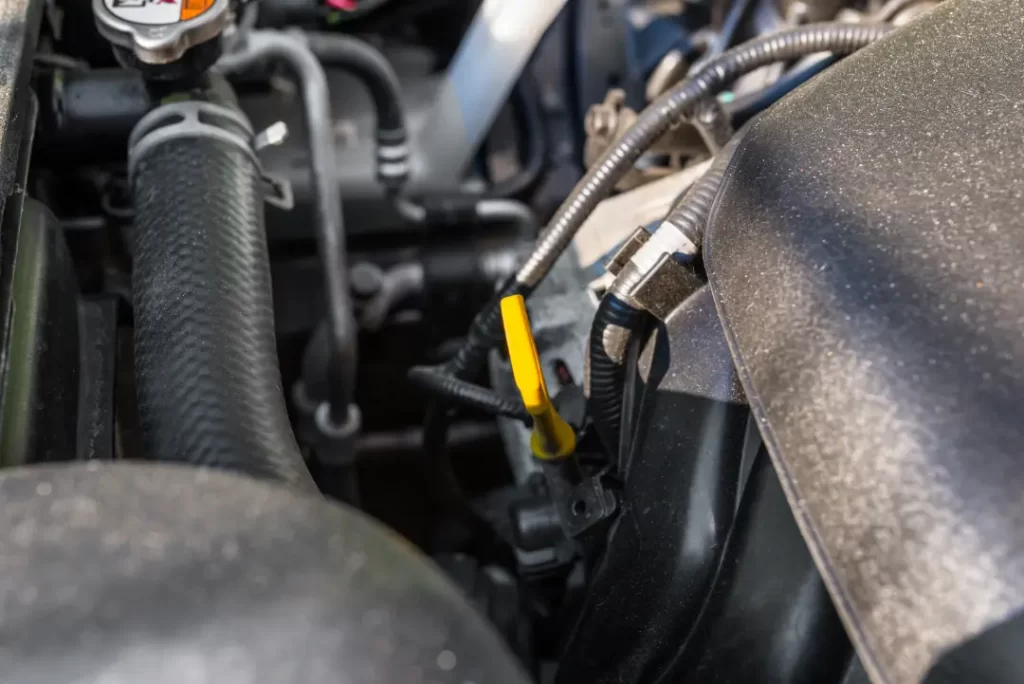
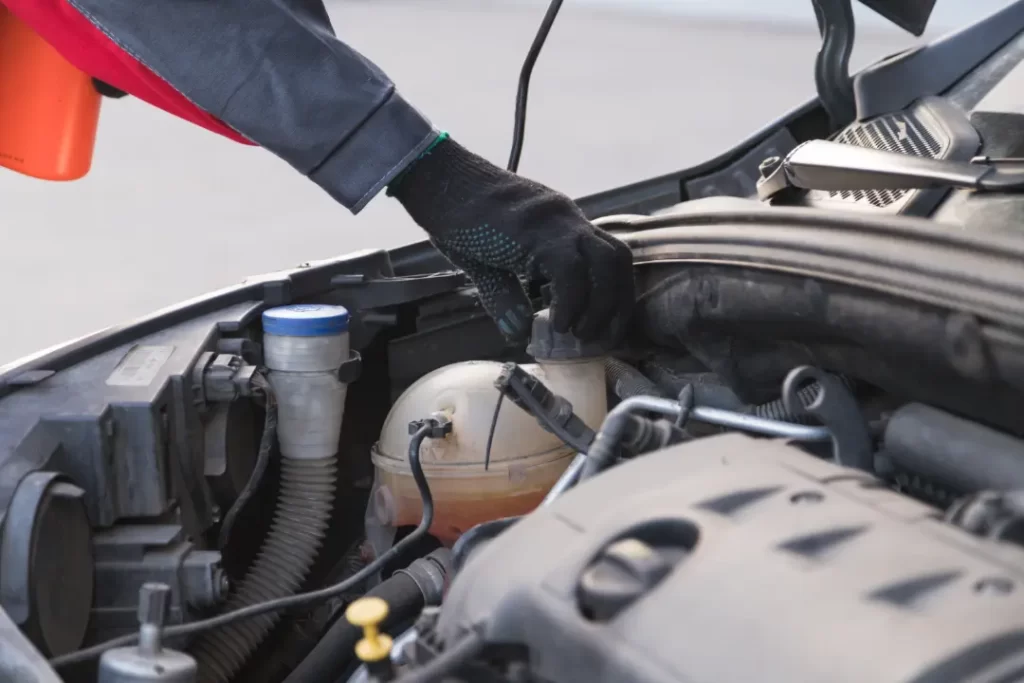
Begin by locating the brake fluid reservoir. Once you have found it, you can check or top up the brake fluid. Typically, you will find this reservoir in the engine compartment, towards the back on the driver’s side. In most modern vehicles, the brake fluid reservoir is translucent, allowing you to quickly see the fluid level inside. This container usually has markings indicating the ‘full’ line, making it easy to verify if your brake fluid level is adequate.
Older vehicles, however, might present more of a challenge. The brake fluid reservoir in these models is often made of metal and can be found under the bonnet, mounted at the rear of the engine compartment. It’s held in place by a spring-loaded clamp, which may require more effort to access.
Your vehicle’s owner’s manual shows the location of the brake fluid reservoir. This manual provides specific details about your car’s braking system and the exact location of the brake fluid reservoir. Knowing where to find this crucial component is the first step in maintaining your vehicle’s braking system.
After locating the brake fluid reservoir, check the fluid level. To get an accurate reading, start by ensuring your vehicle is parked on a level surface.
Afterwards, inspect the reservoir. If it’s semi-translucent, you should be able to see the brake fluid inside. Usually, markings on the side of the container indicate the minimum (‘Min’) and maximum (‘Max’) fluid levels. The brake fluid must fall between these two lines. If the fluid is below the minimum mark, it’s time to top it up.
Refer to your vehicle manual for guidance on reading the fluid level. It provides detailed instructions on how to check the brake fluid level and can help you understand the markings better.
Regular inspection of the brake fluid level, including timely brake fluid changes and brake inspections, helps maintain an effective and safe braking system.
Top Up the Brake Fluid Correctly
Regularly topping up the brake fluid is crucial for consistent brake performance. When the fluid level is low, it can significantly reduce braking effectiveness. To top up the brake fluid, use the correct type, which could be:
- DOT 3
- DOT 4
- DOT 5
- DOT 5.1
Depending on your vehicle’s requirements.
To avoid any spillage or contamination, carefully use a funnel to add brake fluid to the reservoir. Only use brake fluid from a sealed container to ensure it hasn’t absorbed any moisture. Moisture can significantly reduce the effectiveness of the brake fluid, leading to potential braking issues.
Once topped up, clean the area around the reservoir and firmly secure the brake fluid reservoir cap to ensure that no debris or moisture enters the system, helping maintain the integrity of your vehicle’s braking system.
Signs of Low Brake Fluid
Recognising symptoms of low brake fluid can help avoid major problems. One of the most common indicators is a spongy brake pedal. If your brake pedal feels softer than usual or requires pumping to work effectively, it’s a clear sign that something is wrong.
Worn brake pads can also be associated with low brake fluid. When the fluid level drops, it may be due to the brake pads wearing down and requiring more fluid to operate. Additionally, if you notice your brakes vibrating or making unusual noises, insufficient brake fluid could affect the brake pads or callipers.
Another critical sign is a lit brake warning light on your dashboard. This warning should never be ignored, as it could signify low brake fluid or a more severe issue like a leak in the brake system. If you experience any of these symptoms, check your brake fluid levels immediately and consult a professional if necessary.
Clean and Secure the Reservoir Cap
Thoroughly clean the area around the brake fluid reservoir cap before opening it. This step prevents any dirt or debris from contaminating the brake fluid when the cap is removed.
Contaminated brake fluid can lead to a spongy or soft brake pedal, compromising the effectiveness of your braking system. Confirm that the reservoir cap is tightly sealed once the brake fluid has been checked or topped up. This step maintains the brake fluid’s integrity and keeps your braking system functioning correctly.
When and How to Change Brake Fluid Safely
Over time, brake fluid absorbs moisture and air, reducing its ability to transfer pressure effectively within the hydraulic system. When the fluid darkens or you notice a spongy pedal, it’s time to change the brake fluid. Always work in a clean, well-ventilated engine bay, using gloves and protective eyewear.
Start by checking the owner’s manual for the correct DOT grade and fluid capacity. Drain the old fluid from the reservoir, then refill with new brake fluid from a sealed bottle. Avoid letting air enter the lines, as it can cause brake failure. If you’re unsure, have a technician bleed the system professionally.
Never mix motor oil or any other fluid type; it will damage seals and components. Regular fluid replacement helps keep your braking system in good shape, maintaining smooth performance and helping ensure the safety of every stop.
How Often Should You Check Your Brake Fluid?
Consistent brake fluid inspection is key to maintaining reliable brake performance and safety. It’s recommended that you check your brake fluid level every few months to ensure it remains within the recommended range.
This simple check takes only a few moments and can prevent more serious issues later. By checking the brake fluid regularly, you help keep your braking system in good condition, giving you confidence to drive safely.
The Importance of Using the Right Brake Fluid
Using the right brake fluid for your vehicle is key to maintaining efficient braking. DOT 4 brake fluid, for instance, has a higher boiling point than DOT 3, making it suitable for vehicles that place heavy demands on their braking systems. Its formulation is designed to work effectively with ABS systems.
While some brake fluids, such as DOT 3 and DOT 4, are compatible, using a lower grade than recommended can cause the fluid to boil under heavy braking, reducing braking power. The consequences of using the wrong type of brake fluid include rapid deterioration of seals, leading to potential brake system failure.
Always adhere to your vehicle manufacturer’s recommended brake fluid to preserve your braking efficiency and safety. This practice ensures that your braking system continues to perform at its best, providing you with peace of mind on the road.
What Happens If You Use the Wrong Brake Fluid?
Using the wrong brake fluid can cause serious damage to your hydraulic system and compromise your vehicle’s safety. Each fluid type, DOT 3, DOT 4, DOT 5, or DOT 5.1, has a specific chemical composition and boiling point. If you mix incompatible fluids, the system may overheat, corrode internal parts, or lose pressure when braking.
For example, silicone-based DOT 5 doesn’t mix with glycol-based fluids like DOT 3 or 4; combining them creates air bubbles and weakens braking response. Over time, the seals can deteriorate, leading to leaks and costly repairs.
Always check your owner’s manual before adding or topping up. If you accidentally use the wrong type, change the brake fluid immediately and have a professional flush the entire system. Using the correct, manufacturer-recommended fluid ensures reliable braking performance and keeps your system in good condition.
When to Seek Professional Help
Frequently needing to top up the brake fluid could indicate a leak. Persistent issues like an unresponsive brake pedal, spongy brakes, or warning lights on your dashboard indicate that it’s time to consult a professional mechanic.
Ivydene Garage Ltd., a family-run business in Ashford, Kent, has been recognised by Bosch as a centre of excellence and as a Bosch agent for over 32 years. They offer a wide range of services, including:
Their highly skilled technicians use the latest diagnostic and service equipment to ensure your vehicle is in safe hands. Whether you’re experiencing:
- Brake issues
- Engine problems
- Electrical faults
- Suspension or steering issues
- Need a routine check-up
Ivydene Garage Ltd. is equipped to handle most vehicle makes and models, including light commercial vehicles.
Book Your Brake Check at Ivydene Garage
Regular brake fluid maintenance is essential for your vehicle’s safety and performance. By locating the brake fluid reservoir, checking the fluid level, topping it up correctly, and recognising signs of low brake fluid, you can help ensure that your braking system remains in good condition.
Remember, using the right brake fluid and seeking professional help when necessary are crucial steps in maintaining your vehicle. Regular checks and timely interventions will help keep your brakes functioning effectively, providing you with the confidence and safety you need on the road.
Frequently Asked Questions
How Often Should I Check My Brake Fluid?
You should check your brake fluid level every few months to ensure it stays within the correct range. Checking it regularly helps maintain the safety and efficiency of your braking system.
What Type Of Brake Fluid Should I Use?
You should use the brake fluid recommended by your vehicle’s manufacturer, such as DOT 3, DOT 4, DOT 5, or DOT 5.1. Using the recommended type helps ensure reliable performance and safety for your vehicle.
What Are The Signs Of Low Brake Fluid?
If you notice a spongy brake pedal, worn brake pads, or warning lights on your dashboard, it might be a sign of low brake fluid. Be sure to check your brake fluid level regularly to help you stay safe on the road.
Can I Mix Different Types Of Brake Fluids?
Mixing different types of brake fluids is not recommended as it can reduce braking power, especially under heavy braking.
When Should I Seek Professional Help For My Brakes?
If you frequently top up the brake fluid or experience persistent brake issues, you should seek professional help. Addressing these issues promptly will help ensure your safety on the road.