
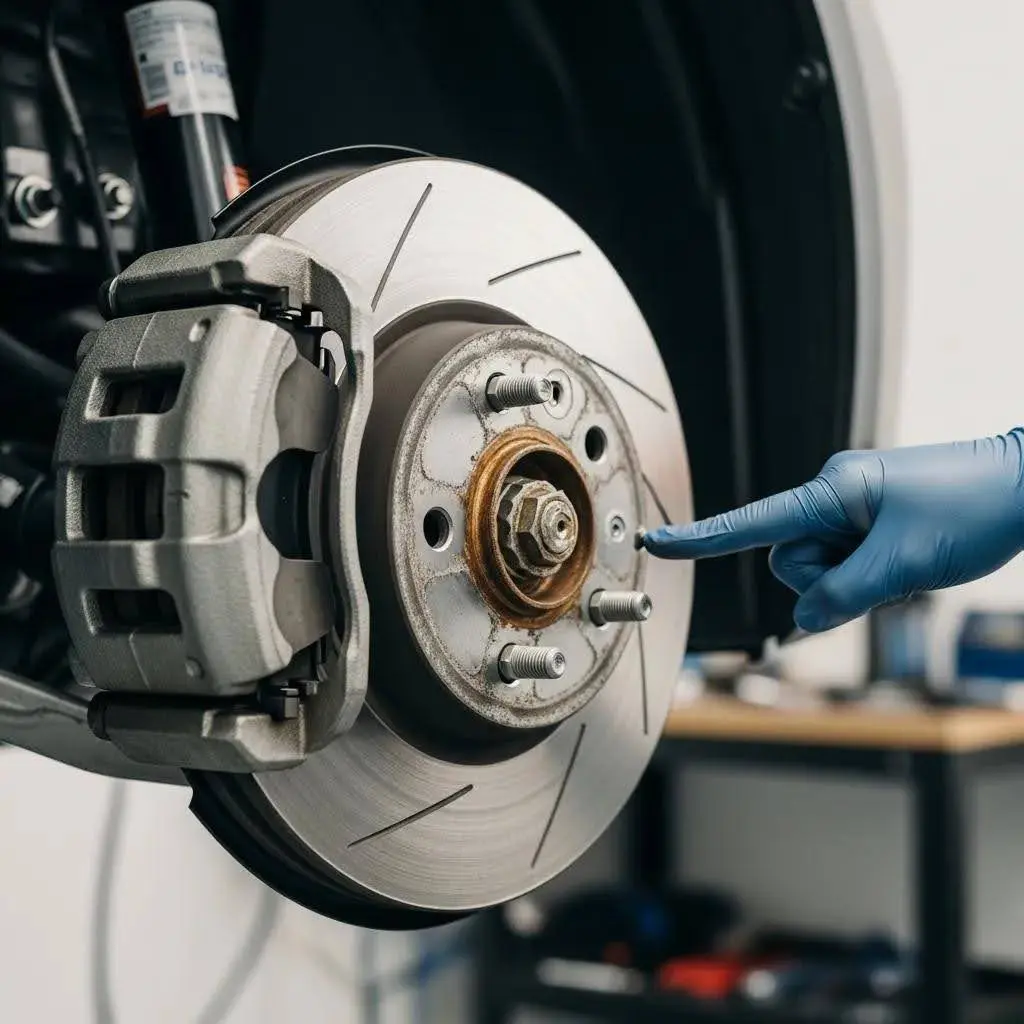
A shudder when you brake, often called brake shudder or brake judder, is a vibration you feel through the steering wheel or the brake pedal when you apply the brakes.
It happens when braking force isn’t applied evenly across the system, creating a pulsing or oscillation. Common causes include warped rotors, uneven pad transfer, sticking calipers, and related wheel or suspension faults.
This article explains the most likely causes, how to spot which part is affected, safe checks you can try at home, and when to book a professional inspection. You’ll also get simple prevention tips and clear advice on when to stop driving and call a garage, tailored for drivers in Ashford and across Kent.
What Are The Most Common Causes Of Car Shudder When Braking?
Brake shudder usually starts with uneven friction or inconsistent rotor contact that produces a pulsation under load, felt through the pedal or steering wheel. Typical culprits are disc thickness variation (warped rotors), uneven pad transfer or contamination, sticking calipers that apply pressure unevenly, and other sources such as wheel imbalance, worn bearings, or suspension faults.
Simple checks can point you in the right direction, but accurate measurement (rotor runout, pad condition, wheel balance) needs workshop tools. The table below shows each common cause, how it creates shudder, and the usual professional fix.
Common causes to consider when your car shudders under braking:
- Warped rotors or disc-thickness variation (DTV), the disc meets the pad unevenly, causing a rhythmic vibration.
- Worn or contaminated brake pads, inconsistent friction, or material transfer can produce judder.
- Sticking calipers, one-sided pressure leads to uneven braking forces.
- Wheel imbalance, worn bearings, or suspension faults- these non-brake issues can mimic brake shudder.
This comparison helps you understand what’s likely causing the shudder and which repair a professional is most likely to recommend.
| Cause | How does it produce shudder | Typical professional fix |
|---|---|---|
| Warped brake rotors (DTV and heat spots)) | Thickness variation makes the pad contact unevenly, creating a cyclic vibration | Resurface if within spec, or replace the rotors |
| Worn or contaminated brake pads | An uneven pad surface or oil/grease reduces steady friction | Replace pads and clean the caliper and mounting areas |
| Sticking or seized caliper | One-sided clamping causes uneven braking torque | Service or replace the caliper; fit new pistons/seals as needed |
| Wheel balance/bearings suspension | Vibration from these parts can be felt most under braking, mimicking shudder. | Wheel balancing, bearing replacement or suspension repair |
Each row links the cause to how it creates shudder and the likely outcome, helping you prioritise which checks to request and which repairs to expect.
Brake Shudder Caused By Warped Brake Rotors
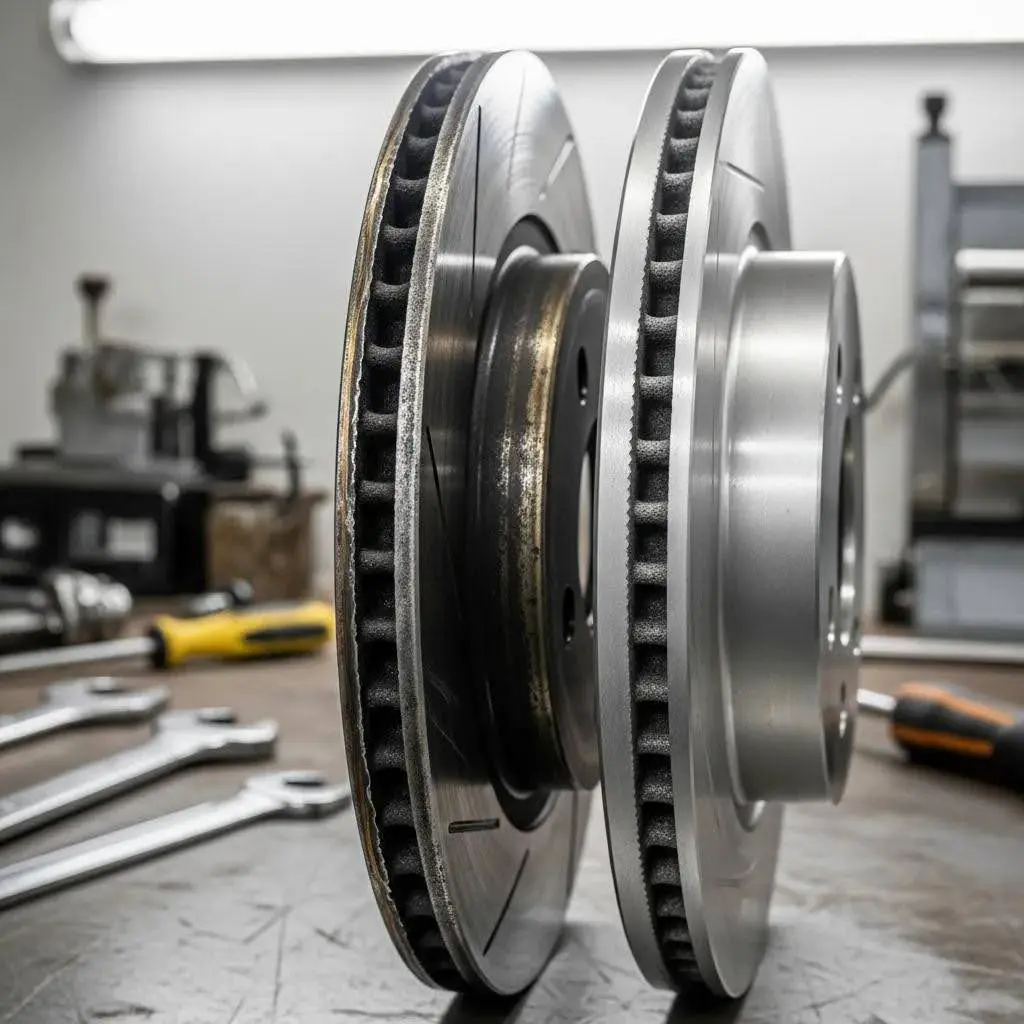
Warped rotors, technically disc thickness variation (DTV), happen when parts of the disc wear differently or develop heat spots. As the rotor turns, an uneven surface produces alternating high and low pressure on the pad.
That alternating pressure becomes a pulsation in the pedal and a vibration in the steering wheel at certain speeds. A technician will measure rotor runout with a dial gauge and check for heat staining or scoring.
If the rotor is still above the minimum thickness, it can sometimes be resurfaced; otherwise, replacing it is the reliable fix to stop the judder and restore a smooth pedal.
Brake Vibrations From Worn Or Contaminated Brake Pads

Unevenly worn or contaminated pads (oil, grease, or brake-fluid residue) give inconsistent friction and can transfer material to the rotor unevenly, which leads to judder. You might see glazed pad faces, notice reduced stopping power, or feel a different vibration compared with rotor-runout pulses.
A workshop will inspect pad wear patterns, remove contamination where possible, and usually replace the pads to restore steady friction. Matching the right pad compound to how you drive helps stop the problem from coming back. Regular pad checks during services help catch abnormal wear and contamination early.
What Symptoms Indicate Brake Shudder Or Brake Judder?
Telling whether vibrations come from the brakes or from tyres, suspension, or the drivetrain is vital for a correct diagnosis. Brake shudder normally only shows up under braking and feels like pedal pulsation and steering-wheel vibration at specific speeds. Tyre or wheel balance faults often show without braking.
Other clues, pulling to one side, grinding noises, or ABS activation, help you and your technician decide whether the issue is hydraulic, mechanical, or electronic. If you spot these symptoms, book an inspection with a local Bosch Car Service agent like Ivydene Garage.
Common symptom indicators of brake shudder:
- Steering-wheel vibration during braking points to front rotors, pads, or wheel-balance issues.
- Brake-pedal pulsation usually indicates rotor runout or ABS modulation under load.
- Noise (grinding or squeal) with vibration suggests pad-to-rotor contact problems or severe wear.
These cues help you decide whether to stop immediately or drive carefully to a workshop.
| Symptom | Likely cause(s) | Urgency Next step |
|---|---|---|
| Steering wheel vibrates only when braking | Front rotor DTV, uneven pad transfer, wheel imbalance | High – arrange inspection soon; avoid heavy braking. |
| Brake pedal pulses through foot | Rotor runout or ABS modulation | Medium–High – have rotors checked and ABS codes read. |
| Vehicle pulls to one side under braking | Uneven pad force, sticking caliper, tyre pressure imbalance | High – stop if severe; book an inspection promptly |
This symptom-to-cause mapping helps you decide how quickly to seek a professional brake inspection.
Steering-Wheel Vibration Linked To Brake Problems
Steering-wheel vibration usually points to front-axle issues because front braking forces transfer directly to the wheel and steering column. When rotors have runout or pads transfer unevenly, the wheel pulses in time with the disc rotation.
If the vibration only happens while braking, braking components are the likely cause; if it’s constant, tyres, wheel balance or suspension are more likely.
Observations such as the speed range, whether the pulse changes with braking intensity, and any accompanying noises help separate brake issues from tyre or bearing faults. If you’re unsure, a trained technician can isolate the source using runout checks, wheel-balance tests and a suspension inspection.
Brake-Pedal Pulsation And What It Indicates
Pulsation through the brake pedal usually means the braking surface isn’t uniform, producing rhythmic changes in force, most commonly from rotor runout or DTV. ABS-related pulsing is different: it’s caused by the system modulating pressure because of sensor faults or wheel-speed discrepancies and often comes with the ABS light on or a distinct pedal feel.
A quick check is to see if the ABS light is illuminated or whether pulses only occur under hard braking. A technician will read fault codes and measure rotor runout to tell mechanical issues apart from electronic ones. Getting the diagnosis right avoids needless parts replacement and restores a firm, even pedal.
When Should I Seek A Professional Brake Inspection For Shuddering?
Safety should be your guide. Seek immediate inspection for severe symptoms like loud grinding, major pulling, loss of braking efficiency, or smoke from a wheel. Persistent shudder that affects control also needs prompt attention.
If the vibration is mild and only occasional, and the stopping distance isn’t affected, you can drive carefully to a nearby workshop, but don’t leave it unchecked because rotor or caliper faults can worsen.
Professional inspection provides precise diagnostics: rotor runout measurement, pad and caliper checks, ABS code reading, and wheel-balance tests, so you avoid guesswork.
For drivers in Ashford and Kent, local Bosch Car Service centres such as Ivydene Garage Ltd offer brake inspections, mechanical check,s and engine diagnostics. Call 01233 636081 for a free quote or to book an inspection.
Priority criteria for inspection:
- Immediate inspection: loud grinding, signs of brake failure, smoke,and major pull to one side.
- Prompt inspection within days: persistent shudder, pedal pulsation, ABS activation.
- Routine check: mild, intermittent vibration that doesn’t affect stopping distance.
These criteria help you decide when to stop driving and when it’s acceptable to drive carefully to a competent workshop.
Driving Safety When A Car Shudders Under Braking
If the shudder is mild and the stopping distance isn’t affected, a short, cautious trip to a workshop may be possible. But stop immediately and seek help if you experience reduced braking performance, severe pulling, grinding noise,s or smoke.
Driving on with a sticking caliper or seriously worn pads risks further rotor damage and higher repair costs, and it increases the safety risk. When in doubt, arrange vehicle recovery or a professional inspection; garages can triage the fault, advise on safe driving limits, and prioritise urgent repairs. Acting early protects your brakes and reduces the chance of roadside failure.
Using Engine Diagnostics To Identify Brake-Shudder Causes
Modern cars use ABS wheel-speed sensors and brake-pressure sensors that can report faults involved in shuddering. A diagnostic scan reads fault codes and logs live sensor data to reveal wheel-speed discrepancies, sensor dropouts, or ABS control events that cause pressure pulsing separate from mechanical rotor issues.
Workshops with up-to-date diagnostic tools combine code reading with live-data logging and mechanical checks to determine whether the control system or hardware is at fault, speeding up the correct repair and avoiding unnecessary parts replacement.
How Can I Fix Or Prevent Car Shudder When Braking?
The right fix depends on the cause. Common workshop actions include rotor resurfacing or replacement, pad replacement, caliper servicing, and wheel balancing or suspension repair when other components are involved.
Preventive steps include regular brake inspections, changing pads on schedule, keeping tyres balanced, and avoiding aggressive driving that overheats discs. The short service comparison below shows which workshop action addresses each fault and what outcome you should expect.
| Service | What it fixes | Typical outcome / benefit |
|---|---|---|
| Rotor resurfacing or replacement | Removes DTV, heat spots, and uneven contact | Restores a smooth pedal and reduces vibration |
| Brake pad replacement | Replaces contaminated or unevenly worn friction material | Consistent braking and improved stopping performance |
| Caliper service or replacement | Corrects sticking pistons or seized sliders | Even pad contact and less drag or pull |
| Wheel balancing and suspension repair | Fixes vibration caused by tyres, wheels or suspension rather than the brakes themselves | Removes vibration that can be mistaken for brake shudder |
This table clarifies which service best addresses different root causes and the benefits you should expect as a driver.
Brake Repair Services For Warped Rotors And Pad Wear
Workshops decide between resurfacing and replacement by checking rotor thickness and surface condition. Resurfacing only works if the disc stays above the manufacturer’s minimum thickness and can be restored evenly.
Pad replacement is usually recommended when pads show uneven wear or contamination, and choosing the right pad compound helps reduce squeal and transfer issues.
Calipers with seized pistons or corroded sliders often need a rebuild or replacement to restore balanced clamping. A professional assessment ensures the parts match the vehicle specifications and the repair is a lasting fix rather than a quick patch.
Regular Brake Maintenance To Prevent Shuddering And Vibrations
Regular maintenance, checking pads, rotors, caliper function, brake fluid, and wheel balance, catches early signs of uneven wear or contamination before they develop into judder. Scheduled service checks and MOT inspections let technicians measure rotor condition and pad thickness, so you can replace parts proactively.
Driving habits matter too: avoiding repeated hard braking, managing long downhill runs and keeping tyre pressures correct all help prevent overheated or damaged discs. Combine routine garage checks with reasonable driving habits and timely tyre care to keep braking smooth and reduce vibration-related faults.
For professional brake repairs, diagnostics and bookings in Ashford, Ivydene Garage Ltd is a family-run Bosch Car Service centre offering full brake services, visual and mechanical checks, engine diagnostics, online booking and free quotes. Call 01233 636081 to request a quote or arrange a brake inspection.
Frequently Asked Questions
What Should I Do If My Car Shudders Only Occasionally When Braking?
If the shudder is occasional, keep an eye on it and book an inspection soon. It may not be urgent, but small issues can get worse quickly. If the shudder becomes more frequent or you notice noise, pulling or reduced stopping power, get it checked straight away by a qualified technician.
Can Brake Shudder Affect My Vehicle’s Overall Safety?
Yes. Brake shudder often signals an underlying brake issue, warped rotors or uneven pads, which can reduce braking efficiency and increase stopping distance. For your safety, have any persistent or severe shudder inspected promptly.
How Often Should I Have My Brakes Inspected To Prevent Shuddering?
As a rule, have your brakes checked at least once a year or every 12,000 miles, whichever comes first. If you regularly drive in heavy traffic, hilly areas, or drive aggressively, you should inspect them more often. Regular checks let you replace pads or rotors before problems develop.
What Are The Signs That My Brake Pads Need Replacing?
Signs include squeaking or grinding noises, reduced braking performance, a vibration or shudder when braking, pedal pulsation, or the vehicle pulling to one side. Regular inspections help catch worn pads before they damage the rotors.