
Clean tyres help protect the rubber, improve grip and safety, and make your car look cared for by removing brake dust, road grime, and tyre browning.
In this practical guide, we show the right way to clean tyres for UK motorists: preparation, the products and tools we recommend, how to restore and protect black tyres, and common mistakes to avoid.
You’ll learn how sidewall cleaning differs from tread cleaning, when household soap is acceptable, and how to apply tyre dressing safely for a finish that lasts between washes.
How Do You Clean Car Tyres Properly?
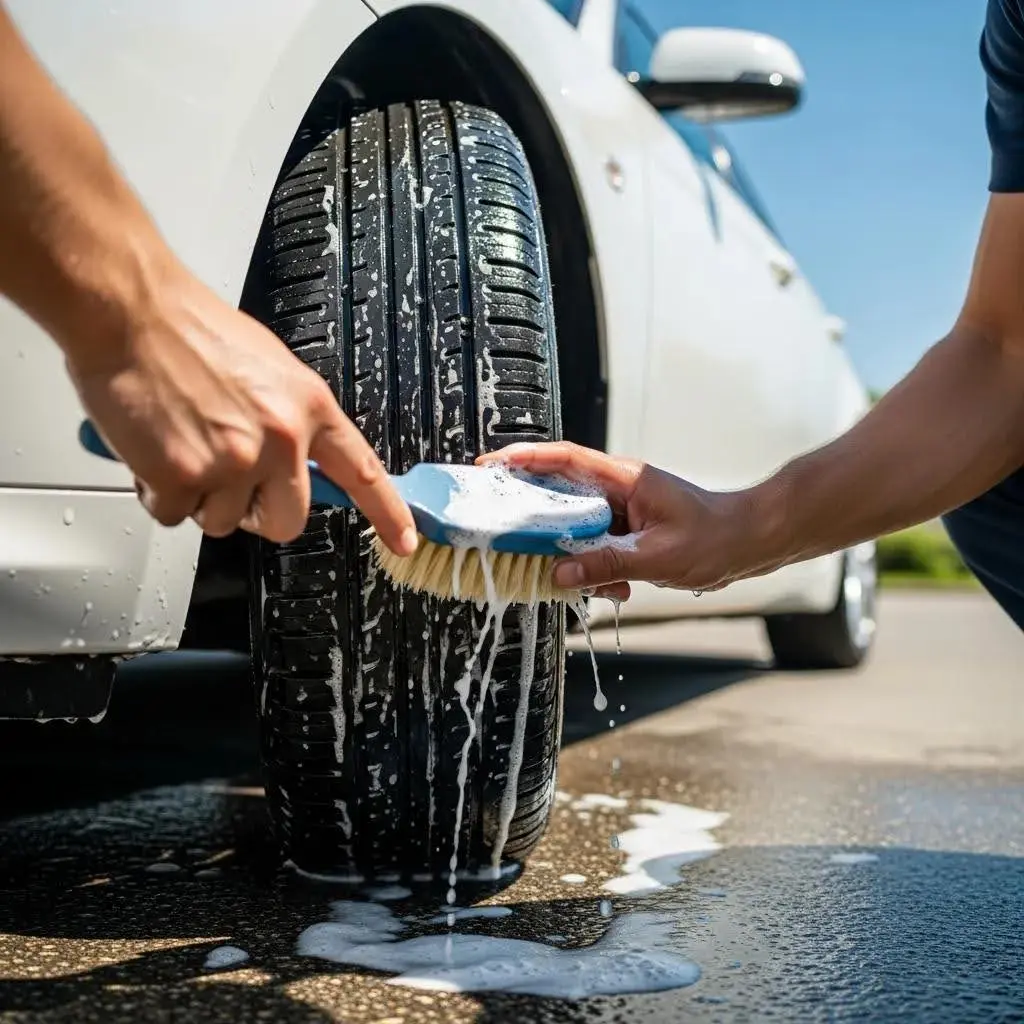
Cleaning tyres properly follows a simple routine: work on cool tyres, give them an initial rinse, apply a tyre-specific cleaner and allow the recommended dwell time, agitate to lift deposits, then rinse and dry.
Water and the right cleaner help loosen and lift contaminants, while gentle agitation removes brake dust without abrading the rubber. The result is safer tyres and a neater finish that lasts longer between treatments. Always park on level ground, ensure the tyres are cool, then follow the steps below for consistent results.
- Rinse the tyre and wheel to remove loose dirt and brake dust.
- Apply a tyre cleaner suitable for sidewalls or heavy grime and allow the recommended dwell time.
- Agitate gently with a soft or medium brush on the sidewall; use a firmer brush on the tread if needed.
- Rinse thoroughly, dry with a microfibre cloth, and apply dressing only when the tyre is fully dry.
Following these steps prepares the tyre for protection and inspection, and matches the routine used by enthusiasts and technicians alike.
Key Steps For Effective Tyre Cleaning
Focus on safety, the right products, and gentle brushing to protect rubber and wheel finishes. Make sure tyres are cool, and the vehicle is secure. Start with a low-pressure rinse to remove coarse debris and reduce abrasion.
Use a dedicated tyre cleaner, pH-neutral for regular maintenance and stronger alkaline cleaners for oily grime, and observe the product’s dwell time so active ingredients can work. Use a soft-bristled brush on sidewalls and a stiffer brush for the tread; avoid aggressive solvents, then rinse and dry fully before dressing. These steps lower the risk of rubber damage and protect wheel coatings.
If cleaning reveals cuts, bulges, or uneven wear, get a professional check. At Ivydene Garage Ltd in Ashford, Kent, a family-run Bosch Car Service centre, our team can advise on repairs, replacements, MOTs, and safe follow-up care.
Which Tyre Cleaning Products And Tools Are Best In The UK?
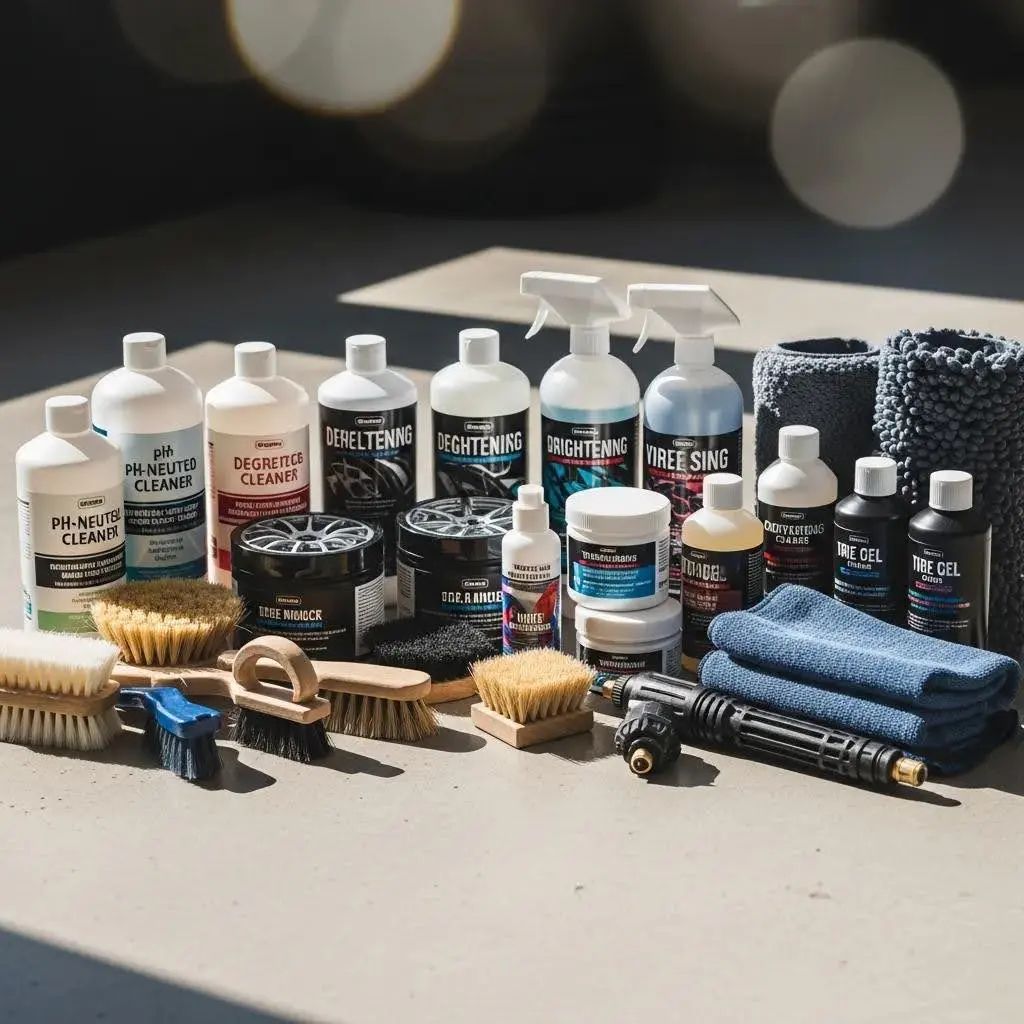
Pick products and tools to match the dirt and finish you’re dealing with: pH-neutral cleaners for routine work, alkaline degreasers for oily deposits, and anti-browning formulas for rubber bloom. In the UK, water-based cleaners lower solvent exposure and are often kinder to alloys while still lifting grime.
Use a soft brush for sidewalls, a stiffer brush for tread, and a microfibre cloth for drying to reduce abrasion and protect tyre markings and valves. The table below summarises the common options and when to use them.
| Product/Tool | Characteristic | Best For |
|---|---|---|
| pH-neutral tyre cleaner | Gentle, non-acidic | Regular maintenance, tyres with coloured sidewalls |
| Alkaline degreaser | Strong grease removal | Oily road grime, tar spots |
| Soft-bristle tyre brush | Flexible, non-abrasive | Sidewall cleaning and lettering |
| Stiff-tread brush | Firm agitation | Deep tread grime and embedded stones |
| Microfibre cloth | Low-scratch drying | Final wipe and dressing tidy-up |
This quick reference helps you balance cleaning power with protection for both tyres and wheels.
Recommended Tyre Cleaners And Brushes
Look for pH-neutral formulas for routine work, enzymatic or solvent-free degreasers for tar and oily grime, and bloom removers designed to be rubber-safe. For brushes: a soft, round brush is ideal for sidewalls and raised lettering; a flat, stiffer brush or nylon-tipped tool is better for tread grooves.
Avoid household solvents and acidic wheel cleaners on painted rims and rubber. Always check product labels for “rubber-safe” claims and buy from reputable suppliers or ask a technician if you’re unsure about chemical compatibility.
Safe Use Of Household Dish Soap For Tyres
Dish soap can work for light, occasional cleaning because its mild surfactants lift surface dirt without strong solvents. It won’t remove heavy brake dust or stubborn browning and may leave a thin film that attracts dirt.
For light maintenance, mix warm water with a small amount of dish soap, agitate gently, and rinse well. For heavy contamination or routine care, use a dedicated tyre cleaner to protect the tyre compound and finish. If you’d rather leave product choices to a pro, Ivydene Garage Ltd can recommend suitable options and fit tyres locally.
How Can You Restore And Protect Black Tyres After Cleaning?
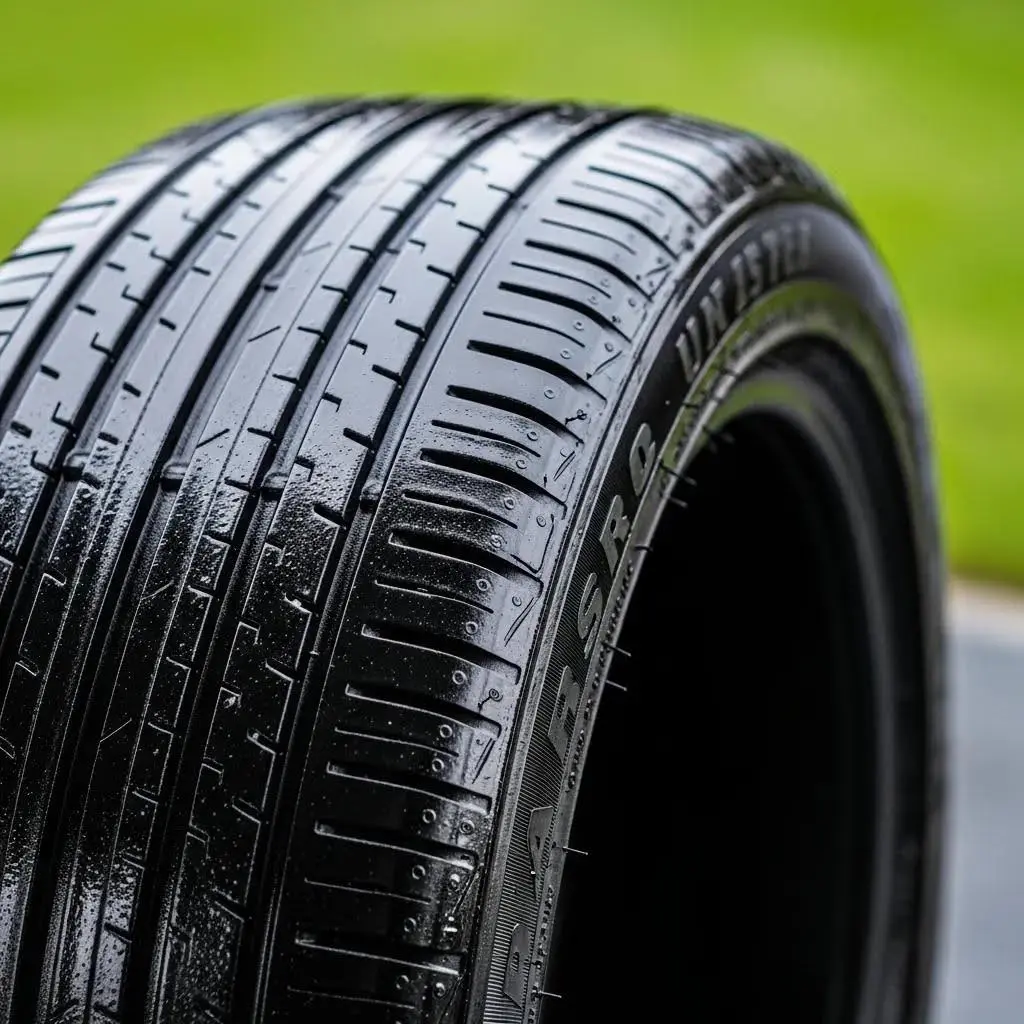
To restore and protect tyres, choose the right dressing and apply it evenly to renew the black look and add short-term protection from UV and ozone. Dressings use polymers or silicones to repel water and reduce drying cracks.
Apply only to dry tyres with an applicator pad to avoid overspray on wheels or brakes. Expect water-based dressings to last a few weeks under normal use; solvent-based products may keep a gloss longer but need more careful application.
| Dressing Type | Finish | Durability |
|---|---|---|
| Water-based | Matte to satin | A few weeks ago, car washes shortened life |
| Solvent-based | Glossy shine | Longer-lasting; use with care |
| Polymer sealant | Low-shine, protective | UV resistance; moderate reapplication |
Use this guide to choose a finish and reapplication schedule that fits how you drive and wash the car.
Tyre Dressing: Purpose And Benefits
Tyre dressing is a topical product for sidewalls that restores black colour and adds a protective layer against UV, ozone, and moisture loss. Water-based dressings give a natural matte or satin look and are typically kinder to finishes; solvent-based dressings give more gloss but can attract dust and, if overused, may soften some materials.
Apply dressings sparingly to clean, dry tyres, avoid contact with brakes and painted surfaces, and reapply according to product guidance. If browning or serious damage won’t shift with home methods, a technician can advise on restoration or replacement.
Removing Tyre Browning And Stubborn Grime
Tyre browning (bloom) is caused by additives migrating to the surface and often needs repeated cleaning with a rubber-safe bloom remover, gentle mechanical brushing, and protective dressing afterwards.
Use a product made for bloom, combine it with a stiff tread brush for ingrained grime while protecting the sidewall with a softer tool, and repeat clean–rinse–dry cycles as needed. Avoid aggressive chemical stripping, as it can damage the rubber or remove protective compounds. If home cleaning doesn’t work, have a professional assess whether the tyre needs replacement.
Sometimes professional restoration or replacement is the safest option; technicians can inspect and advise on next steps.
What Common Mistakes Should Be Avoided When Cleaning Tyres?
Common mistakes can cause unnecessary damage: don’t clean hot tyres, don’t use harsh solvents or acidic wheel cleaners on rubber, and always rinse thoroughly to remove residues. Heat speeds up chemical reactions and can set stains or make cleaners evaporate too fast.
Solvents and acids can leach oils and plasticisers from the rubber, reducing elasticity and speeding up ageing. Failing to dry fully leaves streaks and residue that attract dirt. Stick to cool tyres, use pH-appropriate cleaners, and rinse well to protect tyre integrity and performance.
Why Should You Avoid Cleaning Hot Tyres Or Using Harsh Chemicals?
Hot tyres speed up chemical reactions and increase solvent penetration into the rubber, raising the risk of softening, cracking, or changes to mechanical properties that affect safety and service life. Harsh chemicals and acids can leach plasticisers and oils from rubber compounds, reducing elasticity and encouraging premature ageing or sidewall cracks.
Safer options are pH-neutral cleaners, water-based dressings, and mechanical agitation that removes deposits without over-exposure to chemicals. When in doubt, seek professional advice to preserve tyre performance and avoid unintended damage.
Frequently Asked Questions
How Often Should I Clean My Car Tyres?
Clean tyres about once a month, and more often if you drive in muddy, salty, or gritty conditions. Regular cleaning stops grime and brake dust from building up and helps you spot damage sooner. If you see browning or discolouration, clean the tyre promptly and review your products and technique.
Can I Use A Pressure Washer To Clean My Tyres?
Yes, but be careful. Use a low-pressure setting and keep the nozzle at a sensible distance to avoid damaging rubber or dislodging valve caps and sensors. A pressure rinse removes loose dirt, but follow up with a tyre cleaner and a soft brush for a proper clean.
What Should I Do If My Tyres Are Still Dirty After Cleaning?
If dirt persists, try a stronger tyre cleaner made for heavy grime or browning, and allow the recommended dwell time before agitating. Stubborn stains often need multiple clean–rinse–dry cycles. If the problem still won’t shift, it could indicate deeper ageing or damage; have a professional inspect the tyre.
Is It Safe To Clean Tyres In Direct Sunlight?
It’s best to avoid direct sun. Heat can make products dry too quickly, causing streaks and reducing effectiveness. Work in shade or during cooler parts of the day so cleaners can do their job without drying out prematurely.