
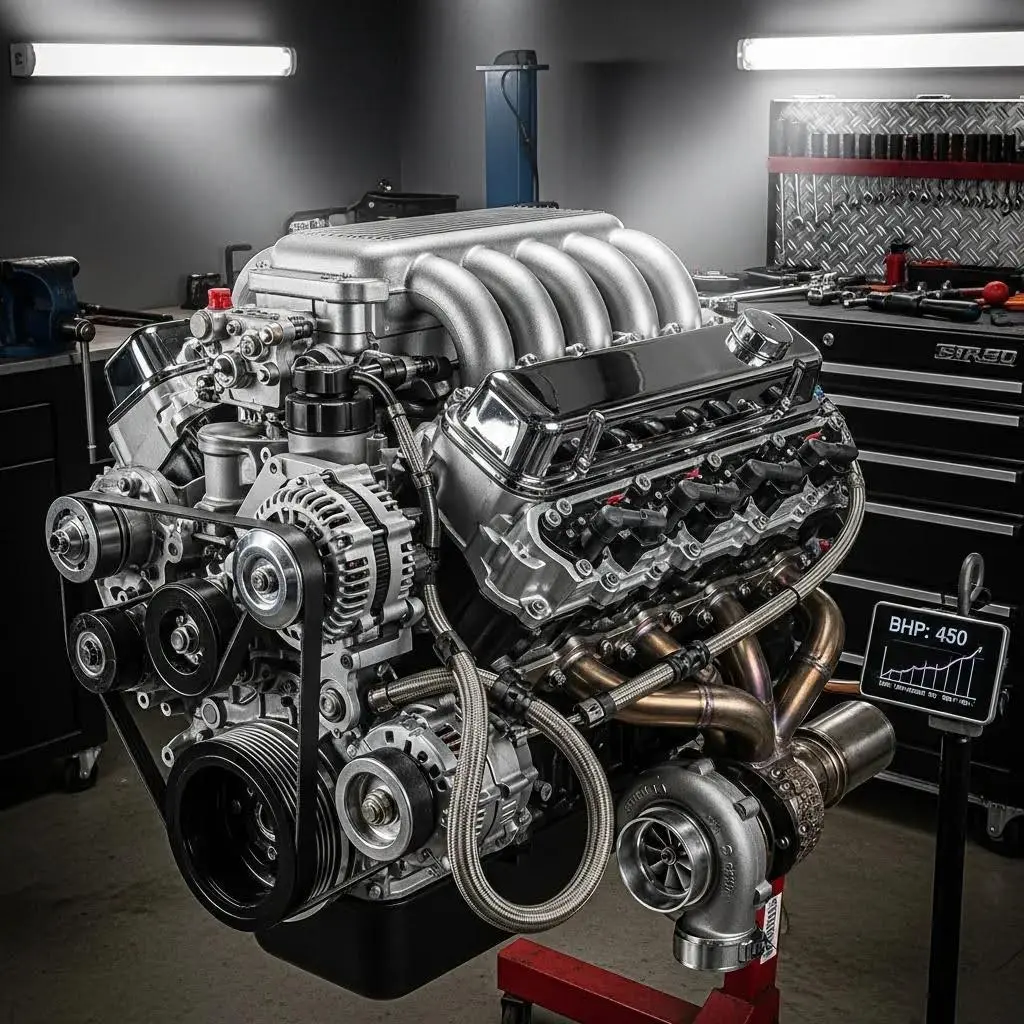
Brake Horsepower (BHP) is the power your engine produces at the crank, before drivetrain losses. Knowing your BHP helps you judge real acceleration and towing ability, spot when the car feels down on power, and make smarter decisions about repairs or upgrades.
This guide explains BHP vs HP and kW, why real-world measurements can differ from manufacturer figures, and the best ways to check your car’s output, from registration/spec lookups to diagnostics and dyno testing, with practical tips for accurate results in Ashford, Kent.
What Brake Horsepower (BHP) Means, And Why It Matters
BHP measures the engine’s usable power at the crank or output shaft before transmission losses. It’s a practical tool for understanding acceleration, towing capability, and throttle response. Knowing the BHP you can expect helps you compare models, spot unexpected drops in performance, and make better maintenance or repair decisions to restore factory-like output.
Below, we explain how BHP relates to other power units and the main mechanical and environmental factors that affect it.
Power is expressed in different units; you’ll usually need to convert ps when comparing specs.
| Power Unit | s.What It Represents | Typical Use |
|---|---|---|
| BHP (Brake Horsepower) | Engine output measured at the crankshaft or flywheel | Manufacturer-quoted engine power |
| HP (Mechanical Horsepower) | Traditional imperial unit similar to BHP | General performance specs in some markets |
| kW (Kilowatt) | Metric power unit (1 kW ≈ 1.341 HP). | Legal and technical specifications in many countries |
These conversions make it easier to compare quoted PS with measured outputs and to check what the numbers actually mean for your car.
How BHP Differs From Horsepower And Other Power Measures
BHP, HP, and kW describe the same physical quantity but often refer to different measurement points. BHP usually means engine/crank output; wheel horsepower (WHP) is measured at the wheels and already includes drivetrain losses.
Manufacturers typically quote BHP or kW, while independent dyno runs report wheel or chassis power, which will be lower because of transmission, differential, and accessory losses.
For example, a 150 BHP car might read roughly 120–130 wheel horsepower depending on drivetrain efficiency, a useful way to gauge the power you actually feel on the road. Knowing the difference helps you pick the right check: a spec lookup for a quick baseline or a measured test for current performance.
What Affects My Car’s Brake Horsepower?
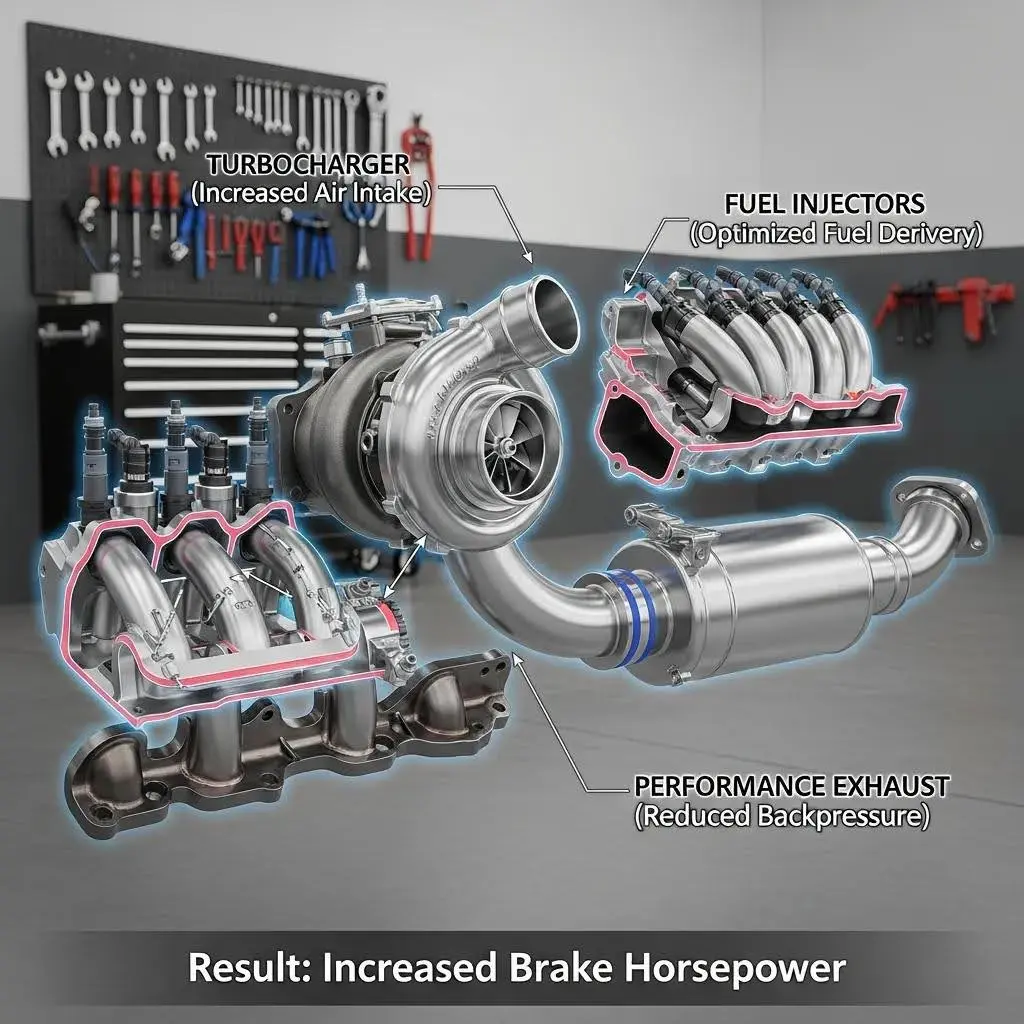
Many mechanical and environmental factors change the measured BHP. Engine wear, blocked intake or exhaust, reduced turbo efficiency, incorrect fuel delivery, and ignition timing faults all reduce peak power. External factors, ambient temperature, altitude, and fuel quality, also affect combustion efficiency.
Drivetrain condition and accessory loads (air conditioning, power steering) lower measured wheel output, widening the gap between factory BHP and real-world results. If you notice sluggish acceleration, higher fuel use, or odd exhaust smoke, these are clues to where to start the diagnosis.
How To Check Your Car’s Brake Horsepower
You can estimate or measure BHP using registration/spec lookups, online tools, on-vehicle diagnostics, or dynamometer (dyno) testing. Each method varies in accuracy, cost, and availability. Registration and manufacturer lookups give the quoted engine power, but won’t show the current mechanical condition.
Diagnostics and data logging reveal live-system behaviour and likely causes of power loss, while chassis or engine dynos give the most direct measurement of wheel or crank power. The table below summarises typical accuracy, cost, and accessibility so you can choose the right route for your needs.
| Method | Accuracy / Cost / Accessibility | Short Description |
|---|---|---|
| Registration lookup | Moderate accuracy / Low cost / High accessibility | Returns the manufacturer-quoted BHP from vehicle records; fast, but does not reflect the current condition |
| Online spec tools | Moderate accuracy / Free to low cost / Very accessible | Good for quick reference; cannot measure current losses or health issues |
| On-vehicle diagnostics | Variable accuracy / Moderate cost / Requires specialist kit | Live data and sensor checks that estimate performance issues and point to root causes |
| Dyno testing (chassis/engine) | High accuracy / Higher cost / Specialist access | Direct measurement of wheel or crank power and torque curves; best for validation and tuning |
Use this table as a decision guide: confirm the spec, diagnose any faults, then validate with a dyno if you plan upgrades or tuning.
- Registration checks give the factory power rating, useful as a baseline, not proof of current output.
- Dyno testing measures wheel or crank power directly and is a highly reliable way to quantify BHP today.
- Diagnostics and data logging identify the causes of reduced power and show whether remapping or repairs are appropriate.
Can You Check Your Car’s BHP With The Registration Number?
Yes, a registration lookup is a quick way to confirm the vehicle’s factory-quoted engine power and set realistic expectations for normal performance. Spec databases show the manufacturer’s published BHP or kW, which is handy when comparing models or checking adverts.
Bear in mind this won’t tell you about current mechanical condition or losses from wear or turbo degradation; use it as a starting point. If you suspect your car is down on power, follow up with diagnostics or a dyno test for an accurate assessment.
Why Dyno Testing Matters For Measuring BHP

A dynamometer measures power and torque directly and produces a power curve showing how output changes across the rev range. Chassis dynos measure wheel horsepower (including drivetrain losses); engine dynos isolate crank output. Both reveal performance bottlenecks and validate the effect of repairs or remaps.
Dyno testing is the right choice when you need precise, repeatable measurements for tuning, after repairs to confirm results, or before and after remapping to quantify gains. Before a dyno run, check tyre pressures, secure the vehicle, and ensure there are no active engine faults so results aren’t skewed.
How Ivydene Garage Checks And Improves Brake Horsepower
At Ivydene Garage Ltd, we use modern diagnostics and remapping within a Bosch Car Service framework to assess and improve engine output for many makes and light commercial vehicles.
As a family-run, Bosch-accredited centre, we combine advanced diagnostic tools and experienced technicians to find the root causes of power loss through live-data logging, sensor testing, and mechanical checks.
For customers wanting to verify or increase BHP, our typical pathway is diagnostic assessment, targeted repairs or adjustments, then validated remapping and, if needed, dyno confirmation. If you’re local to Ashford, Kent, and need an expert check or a remap quote, we can help, from initial advice to booking the car replacement service in Ashford.
| Service | What It Does | Expected Outcome / Next Steps |
|---|---|---|
| Car Diagnostics | Live-data logging, sensor checks, and fault code analysis | Identifies sensors or systems causing power loss; provides a clear report and recommended fixes |
| Mechanical Inspection | Compression, leak-down, and visual checks | Finds mechanical issues such as low compression or leaks and recommends repairs |
| ECU Remapping | Software recalibration of fuel, timing, and boost maps | Potential power and drivability gains after pre-checks; validation recommended |
This shows the typical diagnostic-to-remap route: diagnose, repair where necessary, then validate any gains.
- Initial scan and live-data review: confirm fault codes and check sensor behaviour.
- Mechanical verification: do compression or leak tests when indicated.
- Recommendation and quotation:
These steps help you understand likely outcomes and set realistic expectations before committing to tuning or repairs.
Which Diagnostic Services Help Assess Engine Power?
Power-focused diagnostics combine electronic checks and mechanical tests to estimate how much of the factory BHP your car is currently delivering and to plan corrective work.
Live-data logging examines airflow, fuel trim, turbo boost, and ignition timing to reveal sensor-related performance losses, while compression and leak-down tests find internal wear or sealing problems that reduce peak power.
Our technicians use these results to estimate likely power loss and recommend targeted repairs or cleaning before any remap; customers receive a clear diagnostic report and suggested next steps. This diagnostic-first approach avoids spending on tuning when mechanical health doesn’t support it.
How Remapping Can Increase Brake Horsepower
ECU remapping adjusts fuel, ignition, and boost maps to optimize combustion and torque delivery within safe limits. When carried out after proper diagnostics, it can increase BHP while improving throttle response and drivability.
Typical remap work includes pre-remap health checks, building a base map, iterative tuning under load, and validation via testing or dyno. Gains vary by engine and whether hardware upgrades (intake, exhaust, turbo) are present.
Professional remaps always start with diagnostics to confirm the engine, turbo, and fuel systems are healthy, and they include validation to quantify any power increase and ensure reliability.
Frequently Asked Questions
What’s The Difference Between Brake Horsepower And Wheel Horsepower?
Brake Horsepower (BHP) measures the engine’s output at the crankshaft; Wheel Horsepower (WHP) is measured at the wheels and reflects drivetrain losses. BHP will usually be higher because it excludes losses from the transmission and differential.
For example, a car rated at 150 BHP might show about 120–130 WHP depending on drivetrain efficiency. Knowing this helps you interpret dyno results and set realistic expectations for on-road performance.
How Often Should I Check My Car’s Brake Horsepower?
Check your car’s BHP when you notice reduced performance, sluggish acceleration, higher fuel consumption, or other signs, and after major changes like remapping or hardware upgrades. Regular checks (for example, during annual servicing) can also flag issues early and help keep the engine operating well.
Can Environmental Factors Affect My Car’s BHP?
Yes. Ambient temperature, altitude, and humidity all affect combustion efficiency and, therefore, power output. Higher altitude reduces air density and can lower BHP, while extreme temperatures change engine operation. Keep these factors in mind when comparing measurements taken in different conditions.
What Should I Do If My Car’s BHP Is Lower Than Expected?
Start with a diagnostic assessment to check for mechanical issues, sensor faults, or fuel/air delivery problems. Fix any identified issues, then consider a dyno test to validate improvements. Regular maintenance also helps prevent future power loss.