
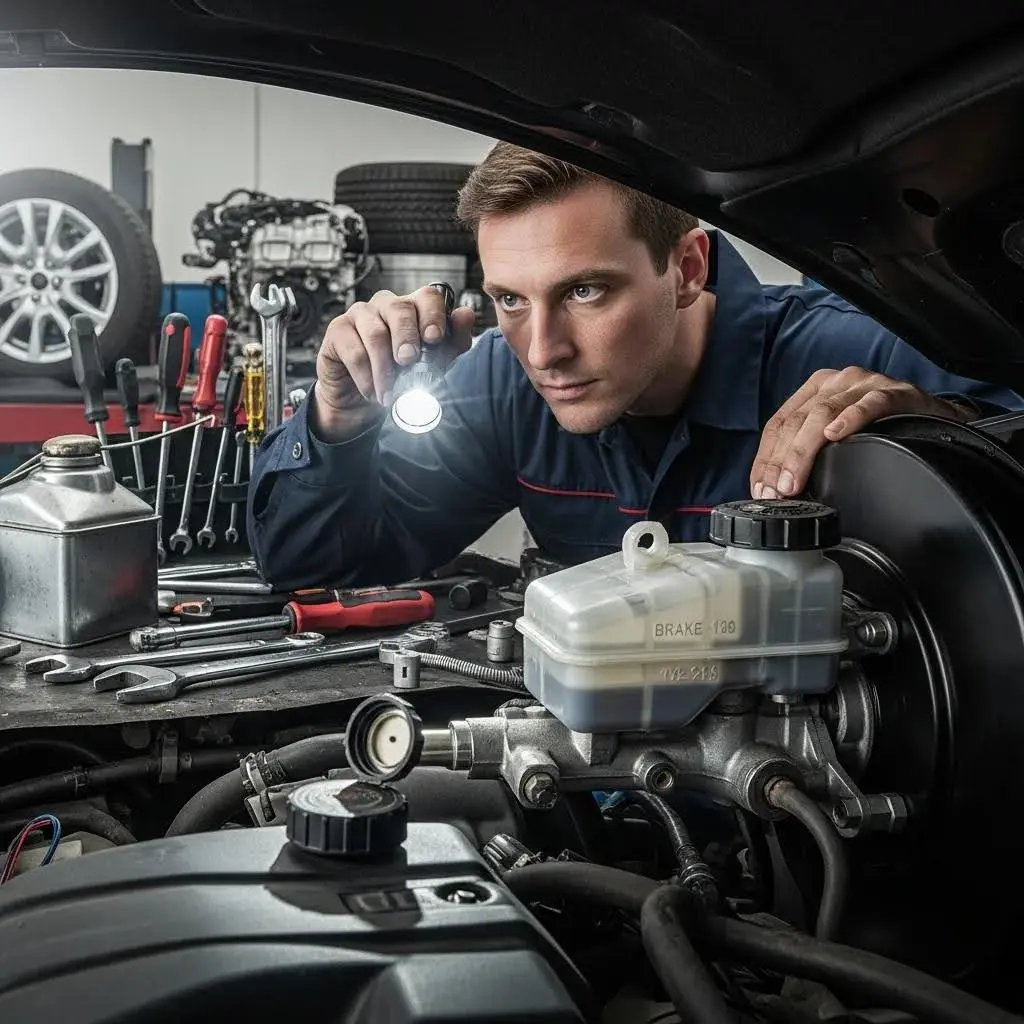
Brake fluid is the hydraulic liquid that turns pedal pressure into stopping force at the wheels. Using the correct specification keeps conventional brakes, ABS and ESC working safely and consistently.
This guide explains the main fluid types, how DOT ratings (DOT 3, DOT 4, DOT 5.1, and DOT 5) differ, and how to check which your car needs from the owner’s manual and reservoir cap. You’ll also learn when to change your brake fluid, the warning signs of low or contaminated fluid, and when it’s safer to let a technician at Ivydene Garage Ltd in Ashford carry out a professional flush and refill.
Which Brake Fluid Types Are Suitable for Cars?

Brake fluids are classified by DOT ratings that tell you the chemical base, typical boiling points and which vehicles they’re suited to. Glycol-based fluids (DOT 3, DOT 4, DOT 5.1) are hygroscopic; they absorb moisture, and are widely used in petrol, diesel, hybrid and light commercial vehicles.
DOT 5 is silicone-based, does not absorb water and is generally not compatible with glycol systems. Your owner’s manual and the reservoir cap carry the manufacturer’s official recommendation; using the wrong fluid can harm ABS function and damage components.
Below is a compact comparison of common DOT ratings to help identify the most likely choice for everyday UK cars and light commercials.
Different DOT ratings vary by chemistry, boiling points and compatibility:
| b | Chemical Base | Typical Dry / Wet Boiling Point (°C) |
|---|---|---|
| DOT 3 | Glycol-ether | Dry ≥ 205, Wet ≥ 140 |
| DOT 4 | Glycol-ether (higher borate esters) | Dry ≥ 230, Wet ≥ 155 |
| DOT 5.1 | Glycol-based (high-performance) | Dry ≥ 260, Wet ≥ 180 |
| DOT 5 | Silicone | Dry ≥ 260, Wet ≥ 180 (non-hygroscopic) |
As the table shows, DOT 4 is a common modern choice for many passenger cars, while DOT 5.1 suits higher-temperature or heavy-duty use. Always check the vehicle manufacturer’s guidance before substituting one type for another..
Differences Between DOT 3, DOT 4, DOT 5.1, and DOT 5 Brake Fluids
DOT ratings reflect differences in chemical makeup, boiling behaviour, and mixability, all of which affect braking safety under heat and moisture. DOT 3 and DOT 4 are glycol-based and hygroscopic, so they absorb water over time; that lowers their wet boiling point and raises corrosion risk.
DOT 5 is silicone-based and non-hygroscopic, but it’s not compatible with systems designed for glycol fluids and can trap air. DOT 5.1 is a glycol formula with higher boiling points for more demanding use, such as towing or spirited driving, and it can be used in DOT 4 systems only when the manufacturer permits.
The practical advice is simple: follow the owner’s manual, never mix silicone and glycol fluids, and only move to a higher-rated fluid with manufacturer approval or professional help..
Choosing the Correct Brake Fluid for Your Vehicle
Start with the owner’s manual and the reservoir cap; they give the manufacturer’s tested recommendation. For hybrids, EVs, and cars with complex ABS/ESC systems or integrated hydraulics, ask a technician to verify compatibility, as regenerative braking and high-voltage equipment can change service requirements.
If you’re restoring a classic or modifying braking systems, seek professional advice: older seals and materials may not tolerate modern formulations. If you’re unsure, ask for the fluid type to be checked during routine servicing so a qualified technician can confirm the specification and carry out any necessary flush or bleed.
When Should I Change My Brake Fluid? Maintenance Timing and Why It Matters
Timing matters because glycol-based fluids absorb moisture and lose braking performance as water builds up. Replacing the fluid preserves the boiling point and reduces corrosion risk. Regular changes help prevent vapor lock during heavy braking and protect ABS/ESC modulators and metal lines from rust.
In the UK, industry practice often recommends changing brake fluid about every 24 months, though manufacturers vary, and high-use vehicles may need more frequent attention. The table below summarises typical intervals and reasons to help you decide when to book a car service or arrange a test.
| Service Interval | Why | Typical UK Guidance |
|---|---|---|
| Every 12 months | High-use, towing, performance driving | Consider an annual check for demanding conditions |
| Every 24 months | Standard passenger use | Common manufacturer recommendation |
| As needed (test-based) | Low moisture levels or recent fluid upgrade | Technician moisture/boiling-point testing can extend change intervals |
Importance of Regular Brake Fluid Replacement for Safety
Water in brake fluid lowers its boiling point, which can produce vapour pockets during heavy braking and lead to a spongy pedal or reduced stopping power, a direct safety issue. Corrosion from absorbed moisture attacks master cylinders, calipers, and ABS modules, causing expensive repairs and possible system failure if ignored.
Regular fluid replacement keeps hydraulic response consistent, particularly after repeated or high-temperature braking. For drivers who tow, carry heavy loads, or face stop-start urban traffic, professional moisture testing and periodic flushing are especially important.
Recommended Brake Fluid Change Intervals in the UK
Many UK technicians follow a practical rule: change glycol-based brake fluid roughly every 24 months unless the manufacturer advises otherwise, and test sooner for vehicles under heavy use.
Factors that shorten the interval include frequent towing, high-mileage commuting, performance driving, and coastal or harsh climates that increase moisture ingress.
Moisture-content testing or a boiling-point check provides a clear measure and can justify keeping or shortening replacement intervals. For exact advice for your make or light commercial vehicle, request a professional inspection that includes fluid analysis and manufacturer-aligned recommendations.
What Are the Common Signs of Low or Faulty Brake Fluid?
Spotting early signs of low or contaminated brake fluid helps you avoid loss of braking performance and potential failure. The most common indicators are an evidently low level in the reservoir, a persistently soft or spongy brake pedal, and brake or ABS warning lights on the dashboard.
Visible leaks under the vehicle or around calipers, hoses, or the master cylinder are urgent; external loss reduces hydraulic pressure and can make the car unsafe to drive. Use the quick checklist below to assess the issue quickly and decide whether to stop driving or book an inspection
- Spongy pedal: A soft pedal that sinks further than usual when you brake.
- Warning lights: Brake or ABS warning lights illuminated on the dashboard.
- Visible leaks: Fluid stains beneath the vehicle or on wet components.
These signs strongly suggest a fluid-related problem; if you experience severe symptoms or reduced braking performance, stop driving and arrange a professional inspection straight away.
Signs of a Spongy Brake Pedal and Brake Warning Lights
A spongy pedal is usually caused by air in the lines or water-contaminated fluid that vaporizes under heat, reducing hydraulic effectiveness and pedal firmness. Brake and ABS lights can point to a low fluid level, a sensor-detected fault, or deteriorated fluid quality; when those lights appear, avoid long journeys and get a diagnostic check.
You can do simple checks yourself, inspect the reservoir level and look at the fluid colour (dark or murky fluid indicates contamination), but fixing the root cause normally requires bleeding, testing, and possibly a full fluid flush by a technician. Acting quickly helps prevent corrosion and intermittent ABS faults in emergency stops.
Dealing with Brake Fluid Leaks and Reduced Braking Performance
External leaks commonly start at the reservoir, hoses, calipers or master cylinder and need urgent attention because they lower system pressure and let contaminants in. Internal leaks or worn seals can mimic low-fluid symptoms without leaving puddles, so a professional pressure test and visual inspection is needed to find the source.
If you notice leaking fluid or a steady loss of pedal height, avoid long trips and arrange a tow or local garage visit to avert total brake failure. Technicians will locate leak points, replace damaged parts, and refill and bleed the system to restore correct hydraulic operation.
How Can Ivydene Garage Help with Brake Fluid Replacement in Ashford, Kent?
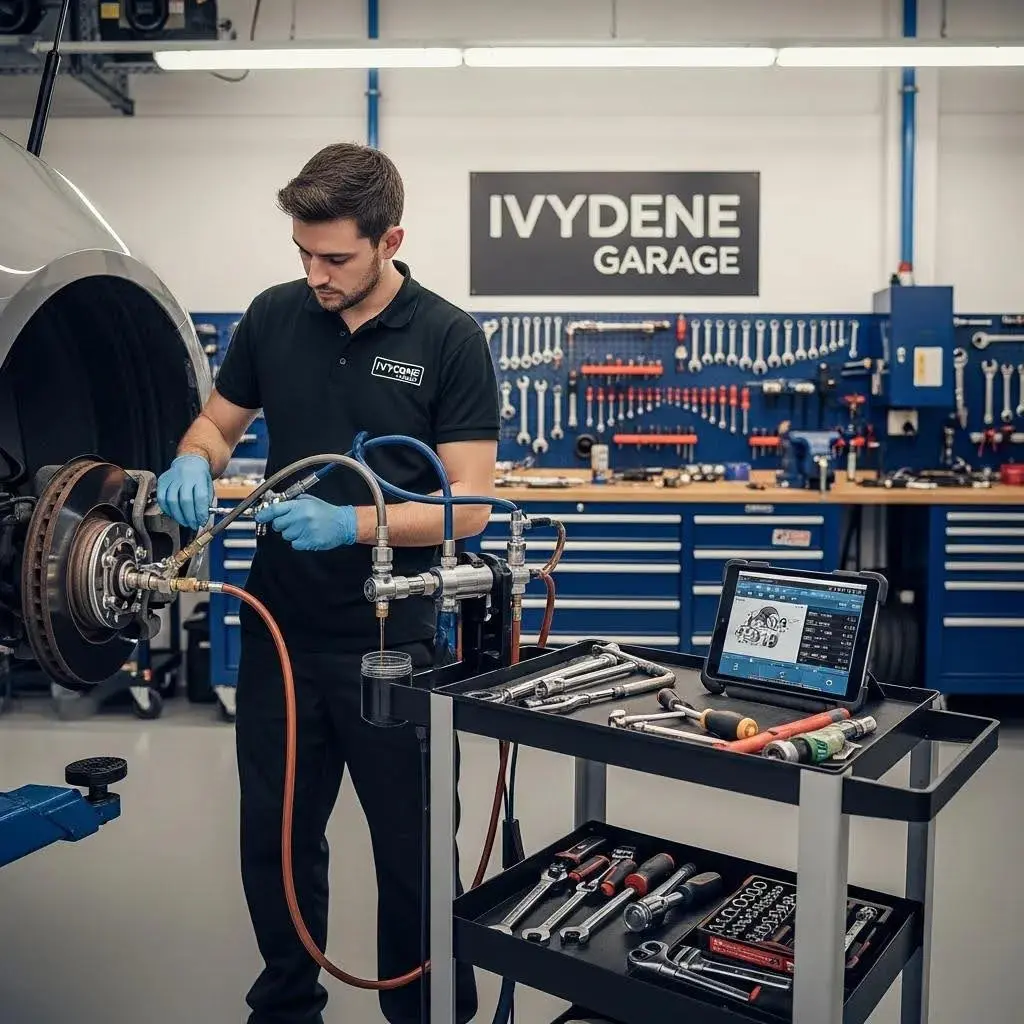
Ivydene Garage Ltd, a Bosch Car Service centre in Ashford, carries out professional brake fluid checks, controlled flushes, and replacements using diagnostic equipment and manufacturer-recommended procedures to keep ABS and braking systems working correctly.
Our car brake technicians inspect the reservoir, lines, and brake components, use the specified fluid for your vehicle, and perform a thorough bleed to remove air and moisture, followed by a road test and diagnostic checks.
Our Bosch affiliation signals adherence to recognised service standards and access to current diagnostic tools for most makes and light commercial vehicles, making Ivydene a dependable local choice if you’re unsure which brake fluid suits your car. You can book online or request a quote for a tailored inspection without the guesswork.
What’s Included in a Professional Brake Fluid Change and Flush
A professional service starts with a visual inspection of the reservoir, master cylinder, hoses, and visible brake components to spot leaks or contamination. Technicians then evacuate the old fluid using a controlled flush to remove moisture and debris, refill with the manufacturer-specified fluid, and bleed the system to eliminate trapped air and restore pedal feel.
Final steps include diagnostic checks of ABS/ESC modules and a road test to confirm braking response, with any replaced components recorded and service recommendations provided. This methodical approach restores hydraulic integrity and ensures the braking system meets safety expectations once work is completed
The service checklist typically includes:
- Inspection: Reservoir, lines, and hardware are checked for leaks and overall condition.
- Flush: Controlled removal of contaminated fluid and replacement with fresh fluid.
- Bleed & Test: Air removal, diagnostic checks, and road test to verify performance.
How Much Does Brake Fluid Replacement Cost in Ashford?
Brake fluid replacement costs in Ashford depend on fluid specification (DOT 4 vs DOT 5.1), vehicle type, and labour required. Light commercial vehicles and high-performance cars typically cost more because their systems are larger or need extra bleeding.
The table below highlights the main cost drivers and their likely impact; for an exact price, ask for a personalised quote or book a short inspection with Ivydene Garage Ltd.
| Cost Driver | Attribute | Estimated Impact on Price |
|---|---|---|
| Fluid Type | DOT 4 vs DOT 5.1 | Moderate (higher-grade fluid costs more) |
| Vehicle Model | Passenger vs LCV/performance | Moderate to High (larger systems require more fluid/time) |
| Labour Time | Bleeding complexity, ABS modules | High (additional diagnostic/bleeding increases labour time) |
Typical local guidance: a basic brake fluid change for a standard passenger car falls into a moderate UK price band; higher-spec fluids or larger systems raise the total. Request a tailored quote or book an inspection to get an exact price based on your vehicle details.
- Book a diagnostic check: A short inspection gives you a personalized cost and service plan.
- Request a quotation: Share your vehicle make/model and any symptoms for an accurate estimate.
- Schedule a service: Use online booking or the quote request to arrange the work at a convenient time.
Frequently Asked Questions
What Are the Risks of Using the Wrong Brake Fluid Type?
Using the wrong brake fluid can have serious consequences. Mixing silicone-based DOT 5 with glycol-based fluids (DOT 3, DOT 4, DOT 5.1) is particularly risky because they’re incompatible and can cause system faults.
Incorrect fluid can reduce braking performance, accelerate corrosion, and, in the worst cases, lead to brake failure. Always follow the owner’s manual or the reservoir cap markings for the correct specification..
Can I Mix Different Types of Brake Fluid?
Mixing different brake fluids is not recommended. Glycol-based fluids (DOT 3, DOT 4, DOT 5.1) absorb moisture, while DOT 5 (silicone) does not and is incompatible with glycol systems. Mixing them risks reduced performance, corrosion, and system damage. If you suspect different fluids have been mixed previously, have the system flushed and refilled with the correct fluid by a professional.
How Can I Check the Condition of My Brake Fluid?
Start by checking the reservoir level and the fluid’s appearance; dark or murky fluid is a sign of contamination. If the level is low, top up only with the correct type. For a definitive check, a technician can carry out a moisture or boiling-point test to confirm whether the fluid still meets safety standards.
What Should I Do if My Brake Fluid Warning Light Comes On?
If the brake fluid warning light comes on, take it seriously. Safely pull over and check the reservoir level; top up with the correct fluid only as a temporary measure. If the light stays on or you notice unusual braking behaviour (for example, a spongy pedal), arrange a car brake replacement promptly to avoid potential brake failure.